
The month of March is kind of like a trick. It’s usually the moment when (in the Northern hemisphere anyways) everyone’s mind turns to spring, warmer weather, longer days, planting flowers, shedding coats, and generally more fun. But over the past 12 years, working with farmers, March felt very different.
March is when the time for planning is over, whether you’re ready or not, and the active season begins in earnest. There is more indoor time than expected because the weather isn’t cooperating. There is more tension and arguments as people realize the crop plan they spent months developing is probably more ambitious than their one human body can put into action. And March ushered in that moment when all of our slow, meditative wintering turned into a completely off the rails inability to cope with the rush of the season.
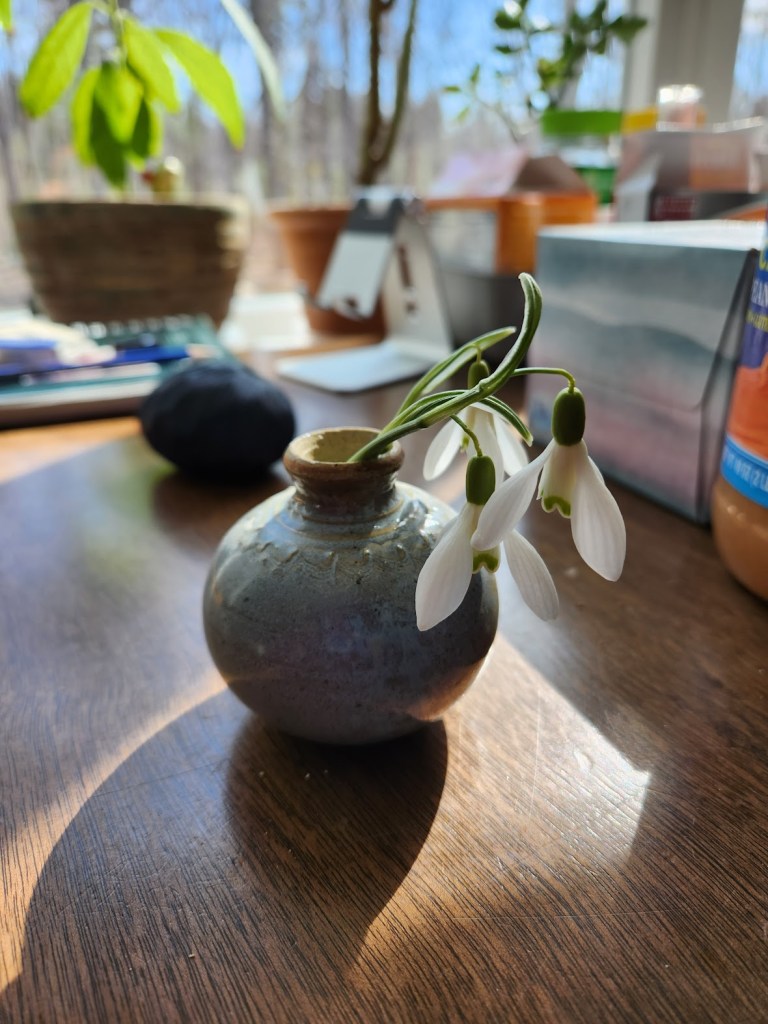
As I’ve navigated these first few weeks of March, these lessons have come back to me. There is more news of loss: my uncle; my cousin’s mom; my close friend experiencing the one-two punch of losing a friend and family member. There is the crankiness and messed up circadian rhythms of daylight savings time. There is the relentless drumbeat of national news, more firings, more law breaking, more funds cut, more hope lost. And then there was the tease of weather– unbelievably warm one day, windy and cold the next.
It is enough to break you sometimes. It is enough to make kids and adults act out. Why does this happen?
I can’t say there is a definitive answer. But I remember one day, years ago, when I used to run a freshman dorm in the middle of New York City (it had its ups and downs, but overall, I would not recommend this as a career choice). Anyways, one day in the first flush of spring, I was the Director On Call, which meant I couldn’t leave the neighborhood, and had to be ready to attend to an emergency at a moment’s notice. I wasn’t expecting anything much. It was a beautiful day, and the students were busy with classes and social life. But I did get a call.
One young woman had contacted mental health services because she was contemplating suicide. I rushed to her room, helped her gather a few things, and took her in a cab to the closest hospital with a mental health emergency room. My job was to make sure her parents were alerted and sit with her until she was admitted. It took quite a while, and we sat together for hours in a tiny, windowless room in the ER, waiting for a doctor. We sat in silence for most of that time, me offering her water or snacks, encouraging her to speak to her parents. After a while, she told me that these feelings often came over her when the season began to change from winter to spring. She was almost always depressed, but in this moment, she could see everyone else, even the trees and the animals, becoming happier and brighter, and she couldn’t keep up with them. She was left behind. It hurt her so much she didn’t want to be part of it, and so that was the time of year when she was most at risk for self harm.
I think about her almost every year at this time. As the snow melts and the sun peeks out, I wonder how she is, and how many people like her are feeling left behind when most of the people and the animals and the plants appear to be brighter and happier.
While I was contemplating all of this in the 63 degree sunshine yesterday, I came across a word I had never heard before: survivance.
The term was coined (or as he says, brought back to use) in 2008 by Gerald Vizenor. Vizenor is a member of the White Earth Nation of the Anishinaabe in Minnesota and is Professor Emeritus at University of California, Berkeley. I have yet to fully read his books about survivance, but I’ll try to paraphrase what I think it means based on what I’ve gleaned so far.

Survivance is the idea that being part of a community that has suffered through genocide, forced assimilation, and all types of oppression does not necessitate that the survivors must be victims. Survivance is the idea that the people who continue to speak, to create, to tell stories, and to practice that culture continue to have power just by doing so. Survivance is the understanding that the stories themselves become a unique being that can have a presence, power, and memory in the world.
I also came across the term “La Survivance” which was a phrase used by francophone French Canadians in Quebec in the 1900s, and then by my French Canadian ancestors in New England who continued to use their language and practice their culture while the world around them pressured them to do otherwise. Vizenor claims French Canadian as well as Anishinaabe ancestry, so there is a link, but it’s not a 1:1 comparison.
I guess I am thinking about this because the idea of survivance is one that really captured my imagination as I was battling this feeling of inevitability that March brings. There were many people who worked hard to erase the possibility of a Gerald Vizenor. Only 1.3% of people living in the United States identify as Native American. For him to live, to speak in the language of his ancestors, to love, to write, to experience joy, and to be a reminder that his being and the stories he tells are very much here is a type of power that does not rely on money, rank, or fame.
The groups who are not remembered as the winners of wars (physical or cultural) have already experienced an apocalypse. And beyond that, there is survivance.
I know I will keep thinking about this and learning more. I know I’m just at the beginning of understanding what survivance is and what it means to me/for me. But learning the word has felt like possibility, like celebration, like resistance, and like welcome sunshine, and I am grateful.


 A Year of Firsts
Leave a reply to Jessica Moore Wilson Cancel reply