
On Sunday I drove to Brookline with one of my dearest friends to attend the second stop on John Green’s book tour for his new book Everything is Tuberculosis. I also received a copy of the book (which was officially released 3.18.25) and finished reading the whole thing as of 6am Tuesday morning. Clocking in at less than 200 pages, it was not hard to accomplish in just three sittings, and it was so engaging, the time flew.
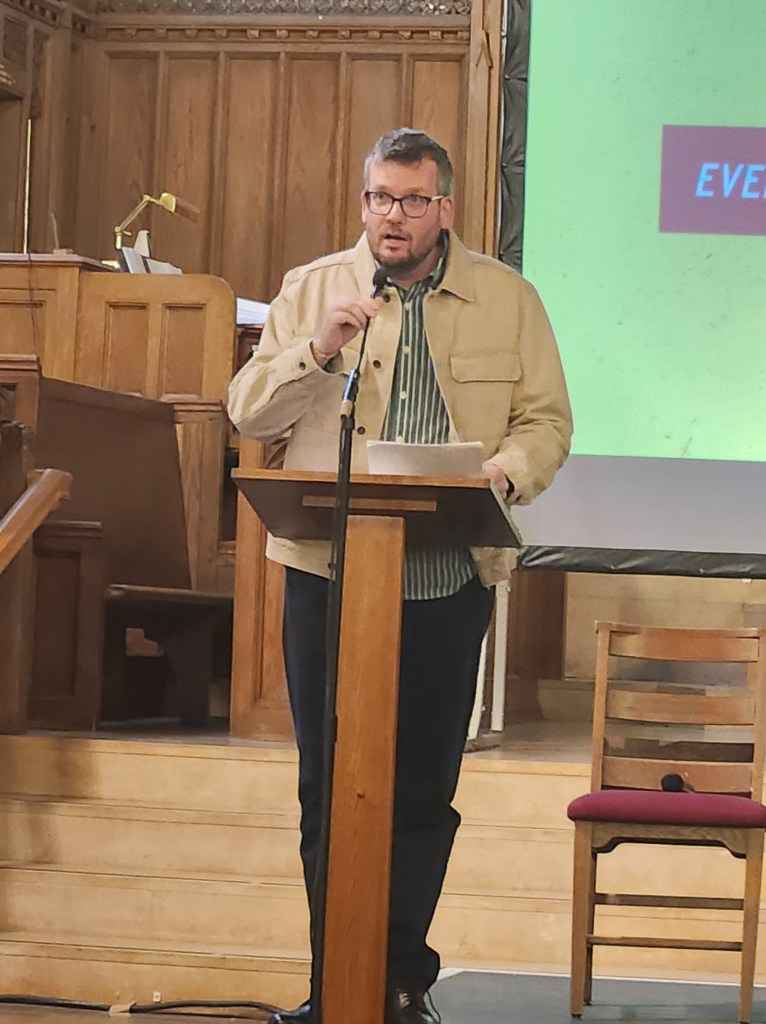
John Green is one of my favorite authors. Most of my friends know about him because one of their kids read The Fault in Our Stars, but since he has written mostly YA romancy-fiction, I didn’t know many other folks my age who were big fans. One friend of mine found his “weird book of essays that’s also a secret memoir” The Anthropocene Reviewed via podcast, which she savored during her long commutes. And so knowing she liked his writing, for several years I have pelted her with all of my John Green affection, sharing info from his YouTube videos, stickers from his now defunct book club, and links to his made up holiday, Pizzamas.
I don’t see much of her these days, and so I bought her a ticket and invited her, and to my delight she was available and joined me. It was awesome to have her all to myself for several hours, and to be with someone who was as excited as I was to see John Green live.
I have followed John Green and his brother Hank on YouTube for a long time – since 2007. And so sometimes I think it’s forgivable that I forget that John Green is not someone I met in college whose career I politely and supportively follow, but that he is, actually, a person I have never met.
So, why do I like his writing so much? He weaves obscure facts and literary quotes together with his observations in ways I never expect. His characters feel like real people, and they are relatable even when their experiences are worlds away from mine. And what I have loved most is that he can teach me about things I feel like I already know about, and break them down into distinct puzzle pieces that are just as fascinating on their own as they are when the puzzle is complete.
The writing skills he’s built through his five novels have actually found new purpose in this book. The book is centered around the story of Henry Reider, a young man in Sierra Leone that John met when he was touring that country with Partners in Health (he is on their board of trustees and has done significant fundraising for the Maternal Center of Excellence in Sierra Leone). At the time, John didn’t care much about tuberculosis, and neither did most of us here in the U.S. It was considered “a disease of the past”. But what he learned when he met Henry, who developed multidrug-resistant TB, is that the disease, while curable, is still prevalent in many poor countries because access to life saving tests and medications is not affordable, and the rest of us choose to leave it at that.
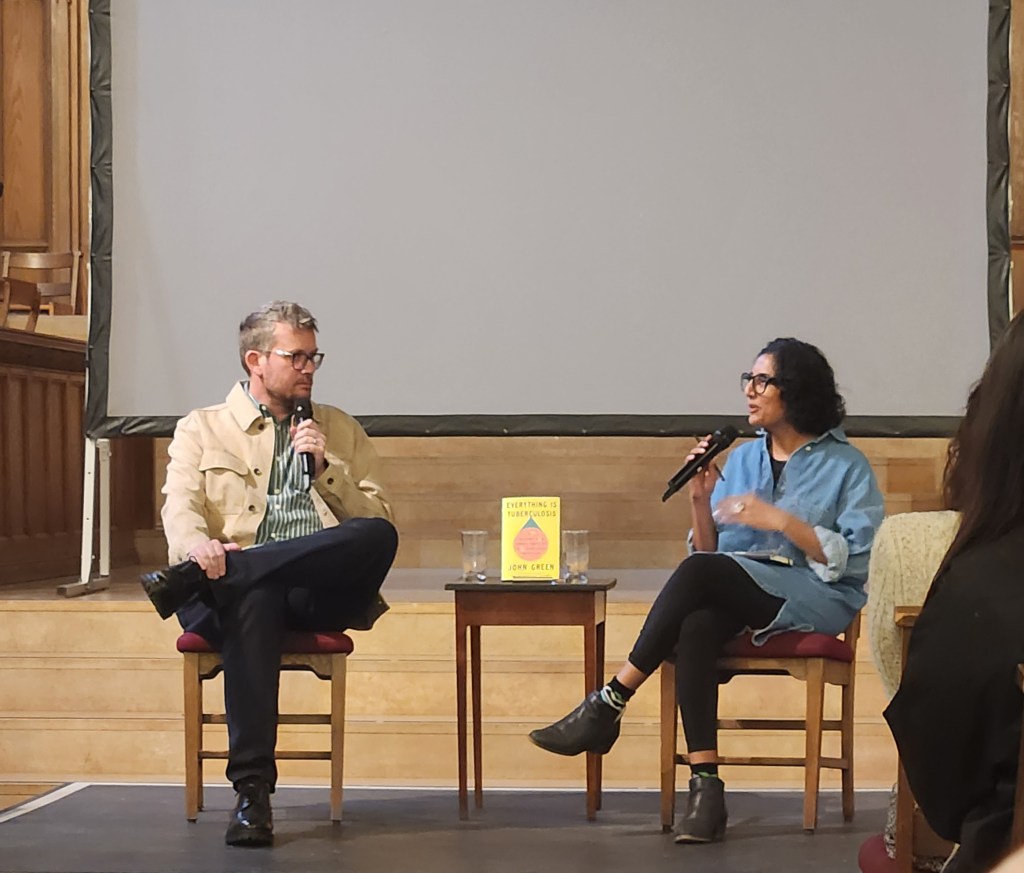
The rest of the book provides a history of the disease including various names for it in different cultures, how it was identified and how treatments were developed, the way it shaped pop culture, they way pop culture imagined the disease through its evolution, and the present day reality of TB – told through the lens of Henry’s life and the lives of other TB patients, activists, and doctors.
I’ve worked in non-profit for many years, and I’m well versed in the “social determinants of health,” the understanding that where you live, how much money you make, and the color of your skin (among other things) can all be a factor in how healthy you will be, and your chances of survival should you contract a chronic or infectious disease. Learning this was not news to me. What was news was the excruciating detail John provided as he picked apart every way, big and small, that political, social, and capitalist systems have cured TB for some, but not all. And then describing, with no holds barred, what it looks like for those deprived of the cure to slowly die because of global neglect.
Making the parade of facts easier to remember were the stories of people whose lives were nothing like mine, but who felt like they could be neighbors. While they are up against some staggering odds, the book manages to portray them not as people to be pitied nor angelic heroes, and I really appreciated that.
I’m married to a person who uses a wheelchair, and something he told me once, when we were first dating, is that he hates being told he’s inspiring. He is not special because he’s in a wheelchair. He is just a person, living his life, and dealing with all of the stuff you have to deal with when you have a disability and the world is mostly not designed with you in mind. And in each of the stories in this book, I saw people who were not more than human because they have to deal with this disease, but people with real lives and loves, who have encountered a human problem (disease), and have chosen to fight for access to the human cure, in addition to all the other stuff they still have to do. And I guess that does not make them heroic. What I realized as I read the book is that it makes the rest of us who do not help them complicit in their needless suffering.
This book is special, because it draws and holds attention to a thing that we in the U.S. and other resource rich countries don’t have to see if we don’t want to (well, not until recently, I guess). But reading it has made TB real in my life. The book has spurred conversations with my Mom about her mother’s childhood diagnosis of TB, and bus stop conversations with my 8 year old daughter about what tuberculosis is, and how people get it.
It also reminds me how many experts, activists, scientists, and regular people it takes to create change. That thought can be demoralizing, and make progress seem impossible. But it can also be inspiring.

As John Green ended his book talk on Sunday, he told us, “We are the products of history but we are also ourselves historical forces and together we can change the arc of our story. I’ve seen that happen…I know that today feels like the last day and the end of the story because it’s the last one we’ve lived through so far. But today is not the end of the story, it’s the middle of the story, and it falls to us to fight for a better end.”
I know that for John Green, the TB Fighters (the online community of his fans who commit to TB activism), and the doctors, scientists and activists in his book, this is not the end of the conversation. It’s also not the beginning. But it’s the middle part, where what we say and do really matters. I’m looking forward to doing more to support affordable TB testing and treatment, and continuing to support causes I believe in. Because I think I have something to contribute. Seeing John Green go from goofy YouTuber/YA author to international TB spokesperson has really solidified that thought for me!
Anyways, the book is awesome, and I have an extra copy if you want to borrow it.


 A Year of Firsts
Leave a reply to Swamigalkodi Astrology Cancel reply