
Experiencing so many losses so close together has primed my brain for any messages about the afterlife. The other night, watching The White Lotus (I know…so profound) with my husband I heard the speech by a Buddhist monk, which is decidedly not in keeping with Buddhist writings, but is still pretty nice:
“When you’re born, you are like a single drop of water, flying upward, separated from the one giant consciousness. You get older, you descend back down. You die. You land back into the water, become one with the ocean again. No more separation. No more suffering. One consciousness. Death is a happy return. Like coming home.”
This aligns more closely with this chant by Paramhansa Yogananda that my friend played for me once. (She used to listen to it in her car to help her tone down her road rage.) Anyways:
So do Thou my Lord; Thou and I never apart
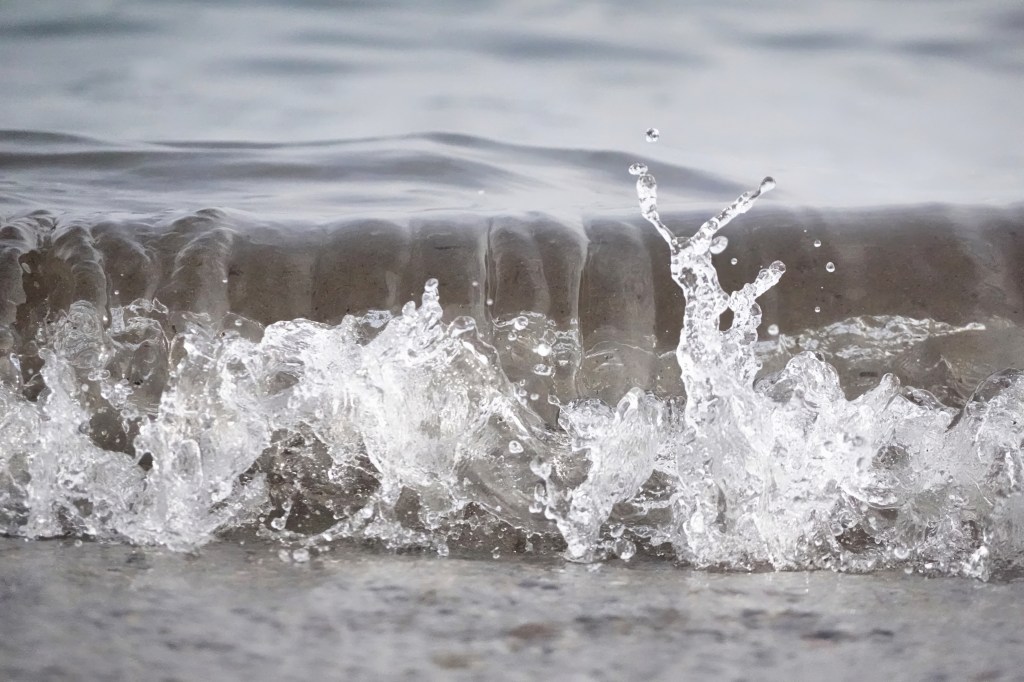
Wave of the sea dissolve in the sea
I am the bubble, make me the sea,
Make me the sea, make me the sea
Yogananda was a leader in Kriya-Yoga which embodies the unity of “original Christianity” and “original Yoga”.
So, not Buddhist. But I’m getting sidetracked.
On Monday, I attended a funeral for my uncle. He had Parkinson’s disease, but despite that, lived a long life. As my cousin wrote, “he persevered where many may have given up sooner.”
He was a very accomplished man who worked in public higher education for decades, and served in several leadership roles: hiring professors, introducing new programs, and establishing scholarships.
What struck me in the beautiful eulogy his daughter, my cousin, gave, was the focus on his life out of work, too. She talked about how he would call a foggy March morning, like the one on which we held his services, “a real New England spring day” and how much he loved hiking in nature, seeing mountains, digging in his garden, traveling, and spending time with family.
She talked about how he woke up at 5am every day to prepare for his day, so he could be the best professor he could be, and return home to see his daughter’s field hockey games, or help her with homework. The idea of doing what we have to do to return home and be where we are most needed, where we most want to be, seemed important.
There are many religions that teach us suffering is part of life – sometimes we are told to accept it, sometimes we are told to seek it out as it purifies us. But ultimately, we can’t expect to be happy on this plane.
That is why I continue to be impressed by stories of those who seemed to find happiness in life, in simplicity, in nature, and caring for others, in books, and sunsets and things that don’t necessarily require a credit card.
I think there is a sea we can return to during this life, even if it’s just for brief moments. It’s found in togetherness – both with people, the natural world, and with ourselves. This idea that we are a temporary piece of the eternal, feeling that in our bones when we allow it, seems like the best definition of happiness I know.
I’m writing this in such a quiet moment. I can hear the hum of the heater, see the trees out my window. I’m thinking about my daughter’s return home on the bus – I’m expecting her in a few short minutes, knowing she’ll burst out of it in some mood I’ll try to decipher, seeking my attention to her needs, my permission for her requests. Part of the delight of this moment is that it won’t last long, and the anticipation of time with my child. And at the same time, I feel it stretching out around me, feeling endless. Literally nothing is happening. And it feels so decadent.
We tend not to remember these moments, because they are unremarkable. But I think when all of the things competing for my attention fade away, I can feel myself sinking into the sea, and understand that the prosaic is a direct route to the divine.

 A Year of Firsts
Leave a reply to Swamigalkodi Astrology Cancel reply