
About a year ago, I wrote an essay about Kendrick Lamar’s halftime show and it’s been my most viewed post since I started this (after all, the people don’t want grief, they want television). So in celebration of that post, I give you Mr. Good Bunny.
Anyways, this halftime show was, once again, a rapid fire, 13 minute detailed spectacle of music, images, cultural references, and celebrities you may not recognize. This year though, the secret code was Spanish. However, if you can speak it (or understand how to use the internet to look up translations) it was pretty easy to see and hear.
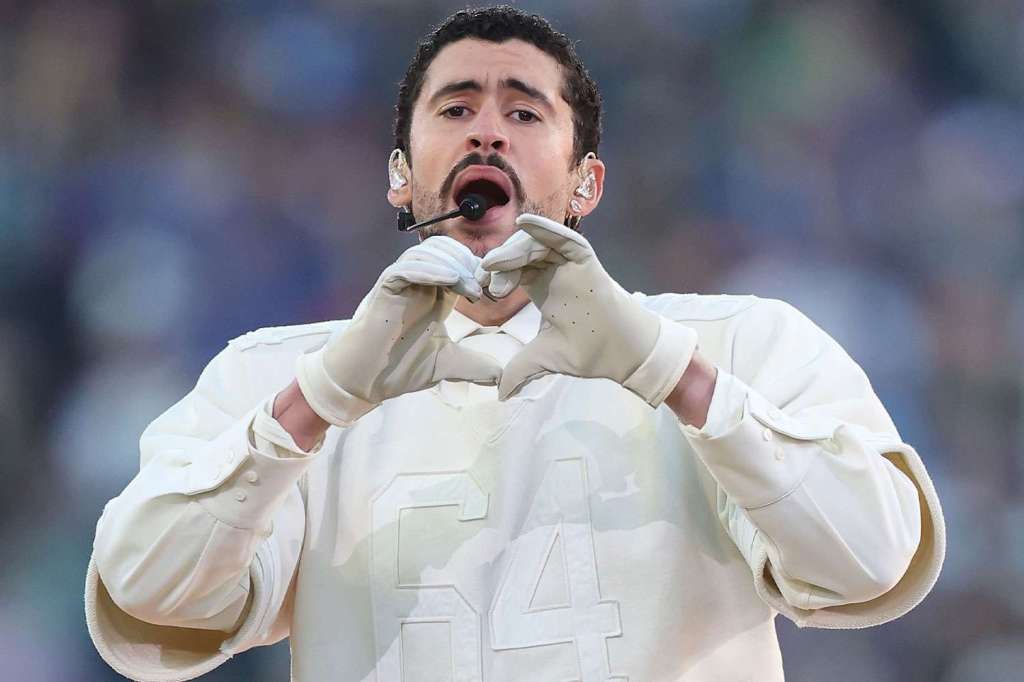
What Bad Bunny does really well is balance a celebration of Latino culture (including family, fashion, and music, but also – without apology – dancing, drinking and sexy stuff) alongside a history of oppression and colonization without losing his joy, or the seriousness of a painful past. The show, and his stardom and his reflection on it and humility in the face of it (see his recent Grammy moment) is a perfect example of the idea of Survivance coined by Gerald Vizenor, which I wrote about way back in March of 2025.
The first thing he does is walk through a crew of workers in a sugar cane field (a place where enslaved Africans and indentured laborers toiled until the industry fell apart in the 1990s and 2000s – yeah, that recently), singing Tití Me Preguntó about how he’s gonna take all his girlfriends to the VIP, while he strolls through scenes of iconic Puerto Rican culture. And OK, the actual lyrics to the uncensored song are a little saucier, but he left most of that out, and gave us a bit of a flipped script – here he is with all of his beloveds, and he brought them all (not just Gabriela, Patricia, Nicole, Sofia, and his Kindergarten girlfriend Maria) including the old guys playing dominos, the boxers, the Piragua vendor, and a dancing group of Latino celebrities including Cardi B and his SNL buddy Pedro Pascal, to the SuperBowl – the grandest of VIPs.
And that’s when he hits us with the recurring theme of the show – love – and a couple getting engaged.
There was the quick rendition of Gasolina – the 2004 song by Daddy Yankee that I must have heard 1,000 times when I worked at a youth center in the early aughts. Daddy Yankee was a reggaeton superstar, and this song was the one that brought him mainstream success. And he was making a connection that Daddy Yankee’s success (he’s won seven Latin Grammys, and his song has charted all over the world) paved the way for his success (6 mainstream Grammys, the first Spanish-language Album of the Year ever, and the global #1 artist streaming in 2025) as he is paving the way for the future as he hands his Grammy to the little boy watching Bad Bunny on TV at home.
And we see that he’s not just talking about romantic love, but love of the self, love of culture, and love of community. “My name is Benito Antonio Martinez Ocasio, and I am here today at SuperBowl 60 because I never, never stopped believing in myself. And you should believe in yourself.”
We got a little cameo from Lady Gaga because every SuperBowl needs a token white girl (seriously, if you go back in the corners of the 2025 internet far enough, you will see the one white girl backup dancer in Kendrick Lamar’s halftime show, doing her choreo for you with her SuperBowl performer pass around her neck).
Lady Gaga sings a salsa infused love song at a wedding party, while all the generations of a family enjoy the festivities. I have seen more than one friend on FB mention that Bad Bunny waking up the little boy asleep on the chairs is SUCH a sweet thing in Latino culture; remembering being a kid dragged to events and falling asleep wherever they could while the older family danced the night away.
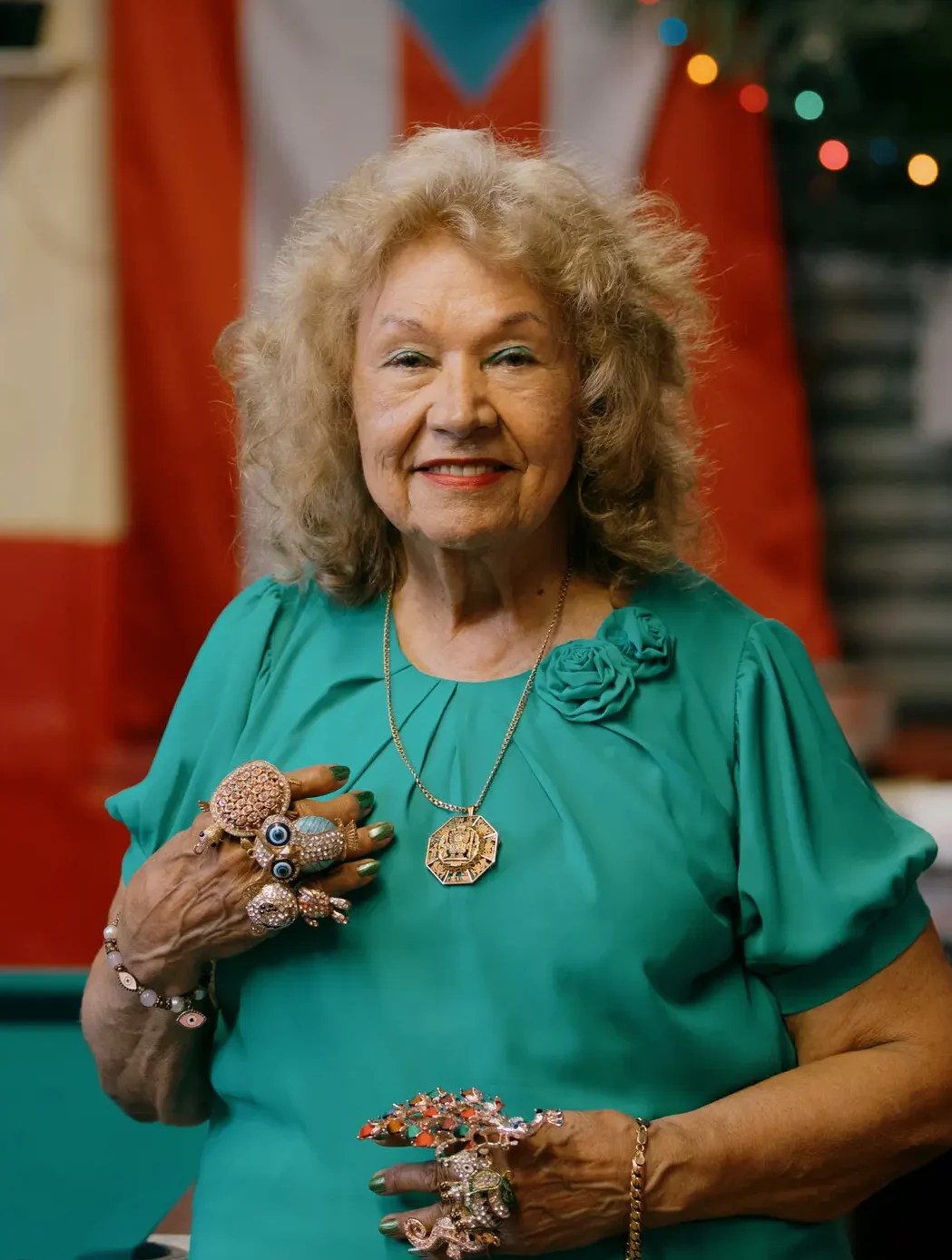
Then Bad Bunny literally falls into the loving arms of his neighbors, while he sings a love song to NUEVAYoL (aka New York). When he sings “Un shot de cañita en casa de Toñita” he is talking about Toñita, the owner of the Caribbean Social Club in Brooklyn, a spot that Bad Bunny loves, that has been a staple in a Puerto Rican neighborhood that is gentrifying. The lady who serves him the shot in that scene – it’s actually Toñita!
And then (OMG) Ricky Martin?!?!?! One of the stars of the legendary Puerto Rican boy band Menudo serenades us with Lo Que Le Paso A Hawaii. The song is a lament, from the point of view of a native of Hawaii, warning the people of Puerto Rico, don’t let them (colonizers, white folks, rich people) do to you what they did to us – they can take the river, the beach, and make your Grandmother move away, but don’t forget your culture (i.e. The flag and the “lelolai” which is like a common refrain in lots of Puerto Rican music that was passed through many cultures and folk traditions and is now something you hear in a million different songs).
Then, all of a sudden, what?, Bad Bunny is climbing an electrical pole. The song he’s singing, El Apagón, is literally The Blackout. If you look up a translation of the lyrics you will most definitely NOT get this, because it reads in English as a song about partying at the beach when the lights go out, and celebration of a very specific part of a woman’s body, BUT it’s a protest song about the U.S. response to Hurricane Maria, and the fact that the electrical infrastructure, among other things, was never properly built back to support the residents of Puerto Rico. The music video for the song actually includes 23 minutes of footage about the lack of government response to the people’s needs.
I happened to have just read Olga Dies Dreaming by Xochitl Gonzalez, which is a novel about Hurricane Maria, Puerto Rican culture in New York, protest and revolution, and families. The novel takes its name from a line in the poem Puerto Rican obituary by Pedro Pietri (one of the co-founders of the Nuyorican Movement). The poem discusses that the end of the Puerto Rican people will come from forgetting who they are, and trying to find happiness and satisfaction from money, competition, and other things that the colonizer culture tells them they need. The secret to solving the problem, Pietri writes, is in remembering and loving who you are.
The reason I bring up the book is that at its center it dives into this exact situation, sharing a fictionalized version of the history of Hurricane Maria, with the same outcome. When the island’s infrastructure was obliterated, the people were left without anyone to represent them in their own government and fight for the relief they deserved. And those who could help stood back and did nothing (or threw paper towels at people) hoping that the residents would leave, and they could rebuild the island as a money making vehicle for the rich.
Finally, as the show wraps up, Bad Bunny says (in English) “God bless America” and then goes on to list the many countries that make up the Americas: “Chile, Argentina, Uruguay, Paraguay, Bolivia, Peru, Ecuador, Brazil, Colombia, Venezuela, Guyana, Panama, Costa Rica, Nicaragua, Honduras, El Salvador, Guatemala, Mexico, Cuba, Dominican Republic, Jamaica, Haiti, Antilles, United States, Canada, and my motherland, Puerto Rico! We are still here!”
Yes, America is quite diverse.
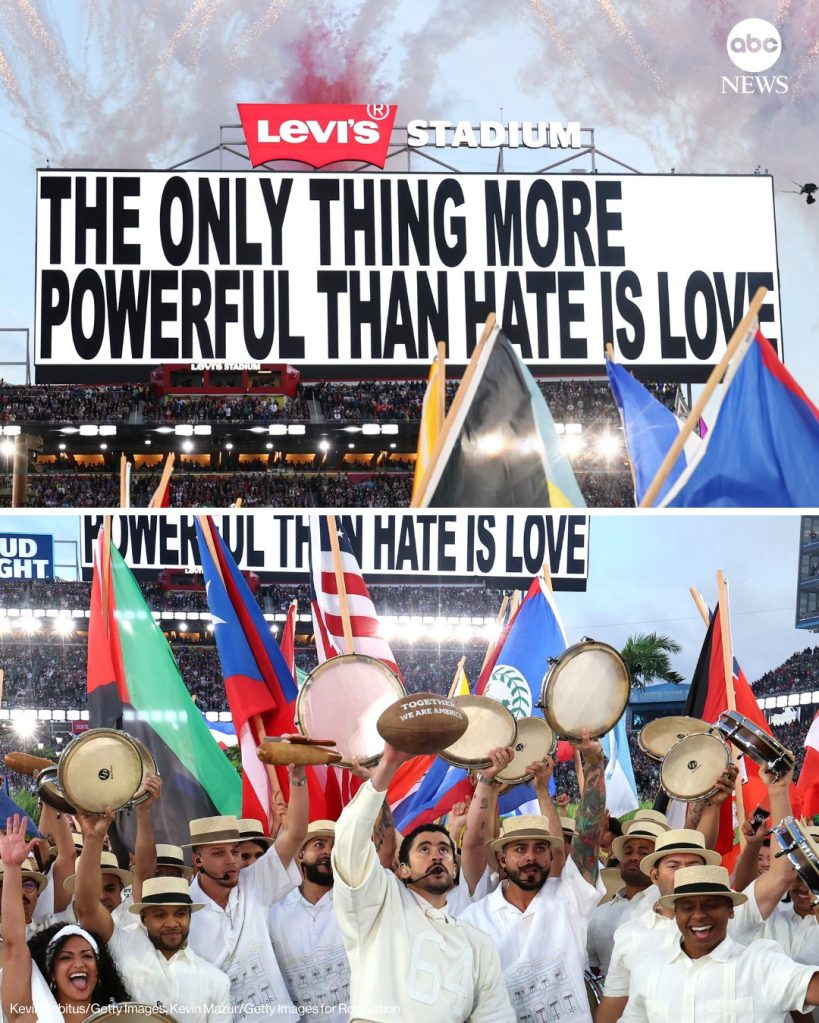
He concludes with a verse from Debí Tirar Más Fotos (a plena, a Puerto Rican call and response folk-song style) or I Should Have Taken More Pictures. It’s about wishing you had more remembrances of the people and places you have loved and lost, and of the times you treasure that will never be again. It can be read as missing a person, a time in your life, or a culture and a way of life that is being erased. Either way, it’s a beautiful song about all of the different types of love we all cherish. All this with the billboard backdrop (again in English), “The only thing more powerful that hate is love.”
On this blog that started because of grief, I don’t think there’s a more perfect Bad Bunny song to end on.
Let me remind you I’m just a white girl doing her own research, and any mistakes I made interpreting are my own. I’m just curious and excited about culture and how people make meaning of it in the world, and all of this is done with the utmost respect in my heart. I hope you enjoyed this, and if any of this is new to you, I hope it helps you watch the show again with a different point of view!


 A Year of Firsts
Leave a reply to ccwilson102290259b Cancel reply