
This Monday marks Memorial Day and having the day off has given me a rare moment to sit in front of my computer without other deadlines pushing in. The rain that has covered us over the last few days has finally cleared, and I’m sitting at my desk, looking out on the newly leafy trees backlit by afternoon sun. It’s just gorgeous.

I can honestly say I’ve made it through many, many Memorial Days without thinking very much about what we are honoring, but I did take some time to think about this today.
It’s difficult to grow up in the U.S. and not know a veteran – either someone in your family history or a friend or co-worker. Whenever I meet younger veterans it still surprises me a little. I think because growing up, veterans were always at least as old as my parents, and usually much older. But of course, we have minted many, many more of them in the years since.
Some are motivated to military service to challenge themselves, find purpose, travel, or simply to escape civilian life. Depending on where their service takes them, though, they can come back with much heavier baggage than they left with.
When I think about Memorial Day, I think about the people who served who did not get to re-integrate those experiences into the lives they left behind. Instead, that experience is handed back to us, the ones who loved them or came after them, and we have to decide where to put those memories. Holidays like this one are our attempt to do something with that sacred burden. It’s an opportunity to make sure those experiences aren’t lost on us, and that we can lay those memories, and those disagreements, to rest in our own hearts. I know, I know, easier said than done.
But really, while a Memorial Day parade may seem like one of the least “woo woo” things in American culture (or any culture really -since almost every country has a holiday like this), it is a ceremony meant to help us heal those rifts in our social and spiritual fabric. This holiday takes the very personal inner pain of those who died, and those who mourn them, and turns it into a national activity. Grief can be one of the most isolating emotions, but this holiday ensures that the mental load can be shared, and gives it structure. It acknowledges that the magnitude of the loss we suffer from war is one that generations must remember, even if we as individuals did not have a direct connection to the loss.
There are two origin stories that you might find when researching the holiday.
The more well known (the one my daughter learned about in school last week) states that Decoration Day was first celebrated in 1868 at Arlington National Cemetery, where children from the Soldiers’ and Sailors’ Orphan Home walked through the cemetery with flowers, honoring both Union and Confederate graves.
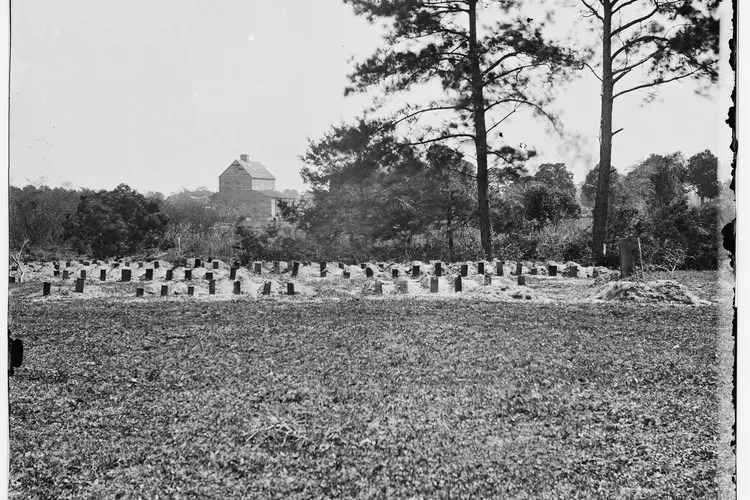
Another, less well known story is that the first Memorial Day celebration was held in 1865 in Charleston, South Carolina where 257 Union soldiers held captive by Confederates died and were buried in unmarked graves. Black residents of Charleston got together to give them a proper burial. Two dozen African American Charlestonians organized the gravesite with a fence, an archway, and signage. A local newspaper reported that about 10,000 people, mostly African American, were there for the celebration which included speeches, singing, flowers offered to the departed, and a parade including a military drill. An article in the New York Tribune said the gathering was “a procession of friends and mourners as South Carolina and the United States never saw before.”

This story was covered in Time Magazine in 2020 and described in David Blight’s 2001 book Race and Reunion: The Civil War in American Memory.
My daughter has started learning more American history this year in the third grade. She’s told me she doesn’t like the stories, because they are upsetting and she doesn’t understand why kids need to learn them. I know the stock answer to this question is, “we learn history so we don’t repeat it.” But somehow I think this would confuse her even more.
Some would say that learning the history and participating in the ceremonies provides a sense of control over an uncontrollable loss. I would argue that it actually unites people in the face of a senseless argument for violence; while we are often told we go to war to protect our neighbors, we cannot get out of war without many of them being buried.
So to my daughter, I will say that honoring their lives, and ensuring their memories and experiences are not forgotten allows them to rest in peace, and gives us purpose and clarity in the lives we lead moving forward. It seems we haven’t learned the lessons they mean to teach us yet, but that doesn’t mean we should stop trying. We owe it to the generations who will come after us – so that hopefully, in the near future, we can stop adding names to the list of people we remember on this day.


Leave a Reply